


Zombie Roguebie: Survivor Game
4.6153.00 Reviews
App Specs
- Version
- 1.19.0
- Updated On
- License
- Free
- Downloads
- 10,000+
- Developer
- Metajoy
- Categories
- Adventure
- Platform
- Android
Screenshots
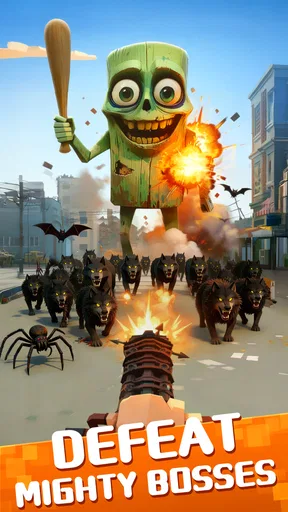
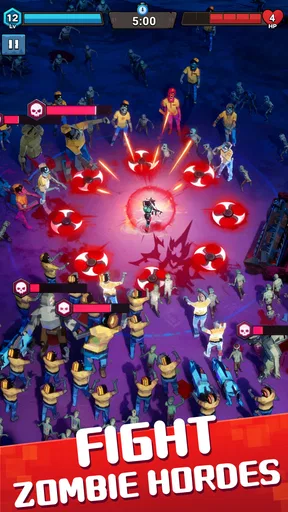
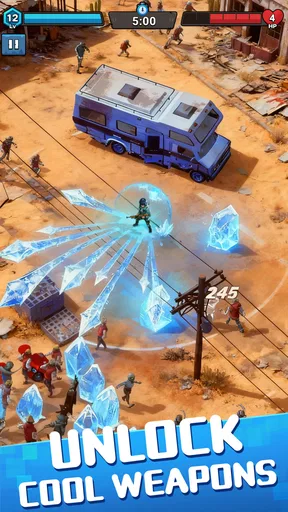
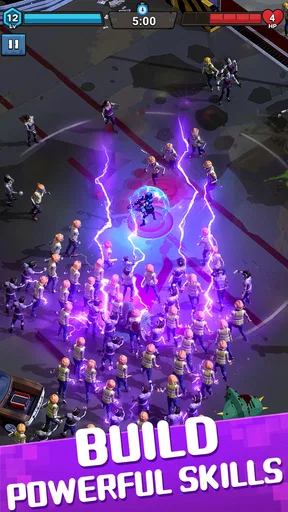
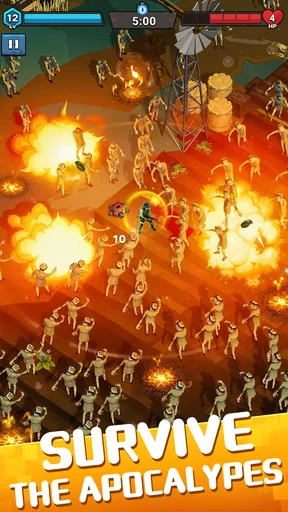
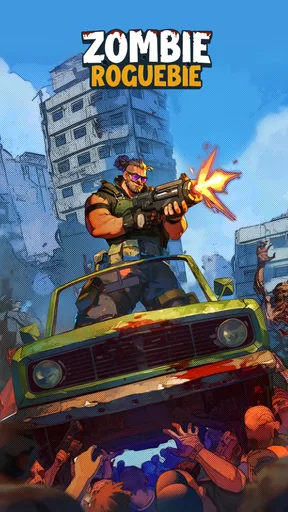
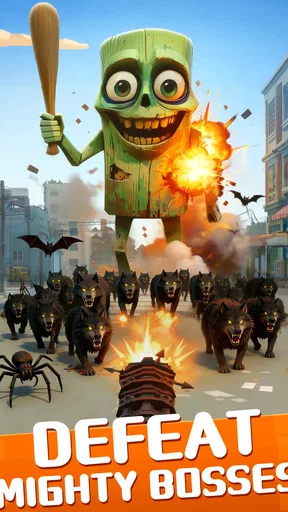
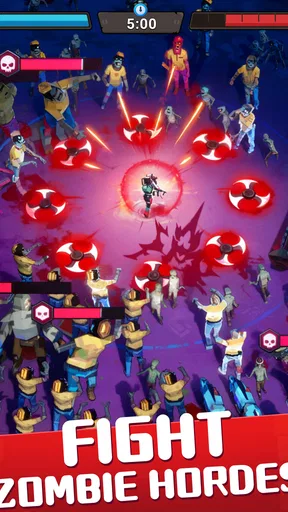
 Analysis by AppCompare
I went into Zombie Roguebie: Survivor Game expecting a compact zombie adventure, but its identity is a little broader than that. Metajoy presents it as a three-part roguelike experience built around shooting, defence, and survival, and that combination matters when judging how it feels in everyday use. It is not simply a game about aiming at undead enemies; it asks you to switch between immediate combat decisions, protecting yourself or an objective, and surviving the pressure of a hostile world.
That mixture makes it appealing for players who enjoy short, active sessions rather than a slow, story-heavy adventure. I can imagine opening it while waiting for an appointment, playing through a tense encounter, and putting it down without needing a long uninterrupted evening. At the same time, the blend of systems means it may feel busier than a straightforward shooter. If you prefer one clear mechanic and a relaxed pace, this is probably not the best match.
How the three-part design affects the pace
The shooting side gives the game its quickest moments. When enemies approach, the important question is not just whether I can defeat them, but whether I am reacting early enough to avoid letting the situation become crowded. That creates a rhythm of scanning, choosing a target, and making space. The defence element changes the priority: sometimes the safest move is not the most aggressive one, especially when protecting a position matters more than chasing every enemy.
Survival adds the longer-term pressure. A successful run depends on managing the current danger without wasting the options that may be needed later. This is where the roguelike structure becomes useful rather than decorative. I have to accept that a run can go badly, learn from the mistake, and approach the next attempt with a better idea of what deserves attention first.
The most useful mindset is to treat each encounter as a resource-management problem, not only a reflex test. Firing immediately may feel satisfying, but it can also distract from the enemy that is creating the real threat. I found it more helpful to identify the danger that could collapse the whole situation, deal with that first, and only then clean up weaker targets.
That approach is one of the less obvious strengths of the game. The store summary is brief, but the combination of shooting, defence, and survival suggests a game that rewards changing priorities. Players who enjoy learning through repeated attempts should find more to think about than someone who only wants a simple wave shooter.
What feels fast and what feels demanding
The game’s perceived speed comes from decision density rather than from any confirmed technical performance figure. A session can feel lively because several concerns compete for attention at once. I am watching the immediate enemy group, considering the safer position, and thinking about whether a defensive choice will help with the next stage. That keeps the action from feeling empty even when the controls themselves are easy to understand.
Worth Reading Before You Choose

EA SPORTS FC Mobile 26 Is a Bigger Football Game, but It Takes Time

Flipboard Shows What News Apps Must Do Beyond the Feed

Switching to Android Auto Means Rethinking Your Driving Routine

Google Calendar Makes a Crowded Week Easier to Manage

Ludo King Makes the Most of the Minutes Between Plans

Baby Panda World Brings Quick Play to Modern Phones, but Its Game Library Feels Busy
However, the same density can make the first sessions feel less comfortable. New players may focus too closely on shooting and overlook the defensive side until a run starts to unravel. I would recommend learning the game by deliberately observing what causes a failure instead of trying to force a win immediately. If the problem is poor positioning, changing weapons or attacking more quickly will not necessarily solve it.
For a realistic everyday scenario, imagine playing during a short commute with only enough time for one attempt. The game suits that situation if you enjoy a concentrated challenge and do not mind ending on a failed run. It is less suitable if you need a calm, easily paused experience or if losing progress feels frustrating after a brief session.
Heavy moments and how to keep them manageable
The most demanding moments are likely to arrive when combat and defence overlap. A normal group of enemies may be manageable, but the pressure changes when I must also preserve a safe position or react to several directions. These moments test whether I have been making decisions with the next few seconds in mind, rather than simply clearing whatever is closest.
My practical advice is to avoid spending every useful option as soon as it becomes available. Holding something back can feel inefficient during a quiet stretch, yet it gives the run more flexibility when the screen becomes crowded. This is especially important in a roguelike game, where a small mistake can turn a promising attempt into a restart.
Another useful habit is to separate urgency from noise. A large group is visually intimidating, but the most dangerous enemy may be the one approaching a protected area or cutting off an escape route. I would rather remove that specific threat first than chase the biggest cluster. This is a concrete difference from many basic zombie shooters, where constant forward attack is usually enough.
Players should also expect the game to demand attention during longer sessions. The three-in-one structure makes it easy to keep playing because each attempt offers another chance to improve, but that can also encourage repeated retries. If you are sensitive to frustration loops, setting a personal stopping point after a few attempts is sensible. The game is at its best when each failure teaches something, not when I repeat the same approach while hoping for a different result.
Reliability in ordinary use
Zombie Roguebie: Survivor Game is listed as free, which makes trying it straightforward. Its current version is 1.19.0, and the game has an average rating of 4.6 from around 542 ratings, alongside roughly 153 written reviews. Those figures suggest that it has attracted a generally positive early audience, although they should not replace personal testing on a particular device.
The install count is over 10K, so this is not presented as a massive mainstream release. I see that as useful context rather than a weakness: the game may appeal more to players looking for a smaller adventure title than to people expecting the polish, scale, or community activity of a major franchise.
In my view, reliability here should be judged in two ways. The first is whether the core loop remains understandable after several attempts. The shooting, defence, and survival roles give the game a clear structure, so I would expect a player to know what went wrong even when the run ends quickly. The second is whether the game remains comfortable during repeated sessions. That depends heavily on the phone or tablet, the operating system, and how much else is running.
I would not choose this title for a critical situation where uninterrupted play is essential. Any action game can become inconvenient if a device is busy, low on available storage, or struggling with its workload. Instead, I would treat it as a casual-to-committed mobile game: easy to try, but best enjoyed when I can give the screen my full attention.
The age guidance is Everyone 10+, which places it above the most child-oriented games. That is worth considering for families. A parent looking for an adventure with zombie themes should check whether the tone suits the child, even though the rating makes it broadly accessible to older children and adults.
Device limits, operating system, and cost
The minimum operating system is Android 7.0, so the game is available to a wide range of Android devices that are still compatible with that software requirement. Compatibility alone does not guarantee an equally smooth experience across every phone. Older hardware may handle a simple menu comfortably but feel less at ease when combat becomes visually busy or when several systems are active at once.
I would begin on a device with a reasonably clear background workload and then judge the experience during the busiest encounters, not just from the opening screen. That is the fairest test of perceived speed. If the game feels responsive in quiet moments but becomes difficult to control under pressure, the issue affects play more seriously than a slow menu would.
Because the game is free to start, the main financial question is not the initial download. In-app purchases range from $0.99 to $99.99 per item, which is a very wide span. I would approach that structure carefully and decide in advance whether I am willing to spend anything. A free entry point is useful, but it should not automatically be treated as a completely cost-free long-term hobby.
This is also where the game may be a poor choice for younger players using a shared device. The Everyone 10+ rating speaks to content, while purchase decisions are a separate issue. Anyone handing the phone to a child should use the device’s purchase controls and agree on boundaries before play begins.
My practical trade-off is simple: try the free experience first, then judge whether its repeated runs provide enough enjoyment before considering any purchase. I would not spend merely to overcome an early learning curve. The point of the roguelike format is improvement through better decisions, and paying should not replace that process.
Who will enjoy it, and who should skip it
This adventure game is a good fit for someone who likes zombies, repeated attempts, and action that asks for more than constant tapping. It should also suit players who enjoy comparing their own decisions from one run to the next. If you often think, “I should have protected that position earlier,” or “I focused on the wrong target,” the design gives you a reason to try again with a different plan.
It is less convincing for players who want a large narrative campaign, a quiet exploration game, or a purely competitive shooter. The three-part structure points toward an arcade-like survival experience rather than a richly detailed role-playing journey. Someone who dislikes restarting after failure may also find the roguelike format tiring, particularly if they prefer steady progress with little repetition.
Compared with a conventional zombie shooter, this game places more emphasis on balancing objectives. Compared with a traditional tower-defence title, it appears more immediate and personal because shooting and survival put the player directly in the danger. Compared with a slower adventure game, it is better suited to focused bursts than to wandering through a large world. Those comparisons help explain its appeal: its strongest quality is the overlap between genres, while its main risk is that players may find the combination less focused.
My performance verdict after looking at the whole experience
Metajoy’s game makes the most sense as a compact, repeatable zombie challenge with three connected demands: attack effectively, defend intelligently, and survive long enough to learn from the attempt. Its perceived speed should come from the constant need to reassess danger, not from expecting every session to be technically identical on every device.
I would recommend installing it if you want a free adventure game for Android that can fill short sessions while still offering decisions beyond basic shooting. I would test it first on the device that will actually be used, paying attention to the busiest encounters rather than relying on the opening minutes. I would also keep the purchase range in mind and set spending limits before handing the game to a younger player.
The final verdict is positive but measured. The 4.6 average and growing audience make it an appealing trial, yet the game’s real value depends on whether you enjoy learning through failure and switching between combat and defence. For me, that hybrid is the reason to play. If you want a focused zombie adventure with quick decisions and repeatable survival pressure, Zombie Roguebie: Survivor Game is worth a look. If you want a relaxed story, predictable progress, or a game that places almost no demand on an older device, I would choose a simpler alternative instead.
Pros
- Fast-paced roguelike runs are easy to start and replay.
- Automatic attacks let you focus on movement and survival.
- Weapon upgrades create satisfying build variety during each run.
- Zombie waves provide constant action without long downtime.
- Short sessions suit quick play on mobile devices.
Cons
- Difficulty can spike sharply after the early stages.
- Random upgrades may make some runs feel overly luck-based.
- Large enemy groups can clutter the screen during intense fights.
- Progression may feel repetitive after extended play.
- Some devices may experience heat or battery drain during sessions.
FAQs for Zombie Roguebie: Survivor Game
What is Zombie Roguebie: Survivor Game about?
Zombie Roguebie: Survivor Game is an action-focused survival title built around fighting through waves of undead enemies. You control a survivor, collect useful items, improve weapons, and try to stay alive as the danger increases. The game combines roguelike progression with fast combat, so each run can feel different depending on the upgrades, equipment, and abilities you choose along the way.
Is Zombie Roguebie: Survivor Game free to download and play?
The game can generally be downloaded and played without an upfront purchase, although availability and pricing may vary depending on whether you use Android or iOS. Like many free-to-play survival games, it may include optional advertisements, in-app purchases, or both. These extras can provide convenience or additional resources, but you should review the store listing before downloading to understand the current monetization model.
Does the game require an internet connection?
An internet connection may be useful for downloading the game, receiving updates, displaying advertisements, synchronizing progress, or using certain online services. However, the core survival gameplay may be available offline in some situations. Because offline functionality can change after updates, players should check the latest store description and test the game after installation if playing without Wi-Fi or mobile data is important to them.
What devices are compatible with Zombie Roguebie: Survivor Game?
Compatibility depends on the version released for your platform, as well as your device’s operating system, available storage, and hardware performance. Before installing, check the official Google Play or App Store page for the required Android or iOS version. Older phones and tablets may experience longer loading times, reduced visual quality, or occasional performance issues during crowded zombie battles.
Is Zombie Roguebie: Survivor Game suitable for casual players?
The game can suit casual players who enjoy short action sessions, simple controls, and gradual character improvement. You can usually enter a run, defeat enemies, collect upgrades, and return later for another attempt. Nevertheless, the increasing difficulty and roguelike structure may require repeated runs and experimentation. Players looking for a relaxed experience should expect some challenge, especially in later stages or stronger enemy encounters.


